

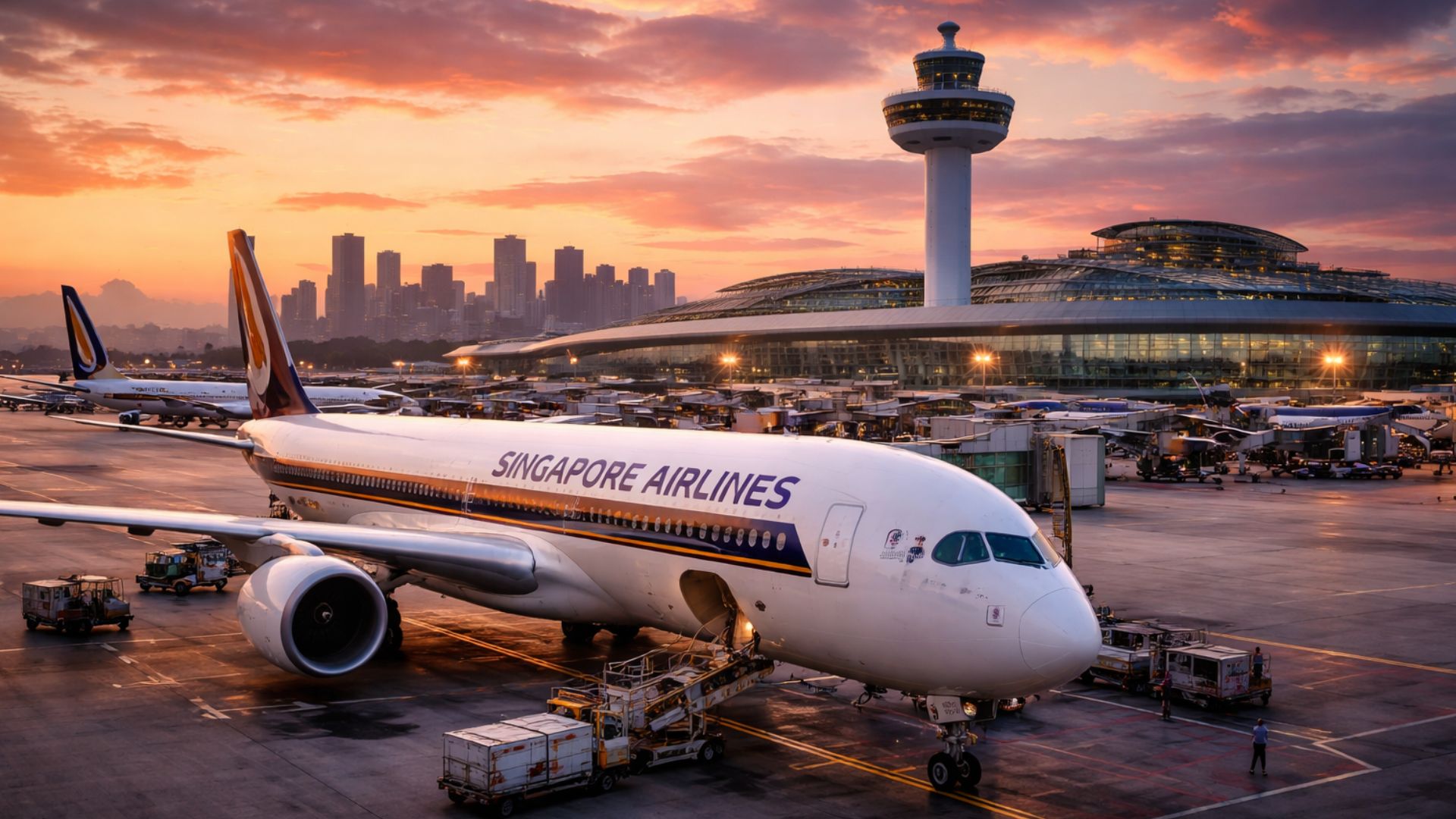







Singapore Airlines has reported another quarter of solid profitability, underscoring the resilience of premium and long-haul travel demand through its Changi Airport hub. Yet beneath the headline profit growth, management has signaled an important shift: ticket yields are beginning to normalize as regional capacity steadily returns. For investors, competitors, and corporate travel buyers, this is not merely a cyclical update. It reflects a structural inflection point in Southeast Asia’s airline strategy, where pricing power is gradually moving from constrained supply back toward competitive equilibrium.
The latest earnings demonstrate that Singapore Airlines remains one of the strongest full-service carriers globally in terms of operating discipline and premium positioning. However, the broader context matters more than the quarter itself. As aircraft deliveries accelerate across Asia-Pacific and grounded fleets fully re-enter service, supply growth is beginning to outpace the extraordinary post-pandemic demand surge that supported record fares. The implications extend beyond Singapore Airlines to the wider airline, hospitality, and corporate travel ecosystem across Southeast Asia.
Earnings Strength Anchored By Premium And Transit Demand
Singapore Airlines’ quarterly results showed sustained profitability supported by high passenger load factors and robust forward bookings. Load factor, a core airline performance metric, measures the percentage of available seats filled and directly influences revenue efficiency. Strong cabin occupancy across both business and economy segments indicates that demand remains healthy, particularly on long-haul routes connecting Europe, North America, and Australia via Singapore.
Premium cabin performance continues to be central to the airline’s margin profile. Full-service carriers such as Singapore Airlines derive disproportionate profit from business class and premium economy seats, which generate significantly higher yield per seat compared to economy cabins. Yield, defined as revenue per passenger kilometer flown, remains elevated relative to pre-pandemic benchmarks, though management has cautioned that it is moderating from peak levels.
Transit traffic through Changi Airport remains a competitive advantage. Singapore’s geographic position enables the airline to operate a hub-and-spoke model efficiently, funneling passengers between Asia, Europe, and Oceania. This hub strength supports network economics by increasing route density and improving aircraft utilization, a key lever in managing unit costs.
At the same time, cargo revenue, which surged during pandemic supply chain disruptions, has normalized. This shift places greater emphasis back on passenger revenue as the primary earnings driver. While cargo remains a contributor, it no longer provides the extraordinary margin buffer seen in earlier recovery phases.
Yield Normalization Signals Return Of Competitive Capacity
The most strategically important signal in the earnings update is yield normalization. During the initial post-pandemic reopening period, limited aircraft supply, constrained staffing, and cautious capacity deployment across global airlines created an environment of pricing power. Airlines were able to command higher fares without materially impacting load factors.
That environment is changing. Capacity, defined as available seat kilometers (ASK), is expanding across Southeast Asia as airlines reactivate stored aircraft and accept new deliveries. Low-cost carriers, regional competitors, and Middle Eastern airlines are restoring frequencies on major routes that pass through Singapore.
As capacity rises, fare competition increases. Even modest declines in yield can significantly impact operating margins in aviation, a sector characterized by high fixed costs and thin structural profitability. Aircraft leases, fuel expenses, maintenance, and labor contracts remain largely fixed regardless of ticket price fluctuations.
Singapore Airlines’ guidance suggests that while demand remains stable, the exceptional pricing conditions of the past two years are unlikely to persist at the same level. This does not signal demand weakness, but rather the rebalancing of supply and demand fundamentals.
Fleet Strategy And Capital Discipline
Singapore Airlines’ fleet modernization program plays a central role in its ability to manage margin pressure. The carrier has invested heavily in next-generation aircraft such as the Airbus A350 and Boeing 787 variants. These aircraft offer improved fuel efficiency, lower maintenance costs, and enhanced passenger comfort, supporting both cost control and premium positioning.
Fuel efficiency is particularly critical in Southeast Asia, where long-haul routes dominate the business model. Aviation fuel represents one of the largest operating cost categories for airlines. Modern aircraft reduce fuel burn per seat, which improves unit cost metrics even if ticket yields soften.
Capital discipline also remains central to the airline’s strategy. After raising substantial liquidity during the pandemic through rights issues and bond offerings, Singapore Airlines strengthened its balance sheet relative to many global peers. A strong liquidity position provides flexibility to absorb yield volatility while maintaining network investment.
Importantly, the airline has not pursued aggressive discounting to fill seats. Instead, it has emphasized network optimization, premium product differentiation, and loyalty program engagement. The KrisFlyer loyalty program remains a strategic asset, generating recurring revenue and improving customer retention across competitive markets.
Regional Competitive Landscape Intensifies
Southeast Asia’s aviation market is entering a new competitive phase. Full-service carriers such as Thai Airways and Malaysia Airlines are restructuring and gradually rebuilding international networks. Low-cost carriers including AirAsia and Scoot are expanding aggressively, particularly on short- to medium-haul leisure routes.
Middle Eastern airlines continue to compete for connecting traffic between Asia and Europe, often leveraging scale and state-backed capital structures. At the same time, Chinese airlines are steadily restoring international frequencies, which increases seat supply on Northeast Asia routes that overlap with Singapore Airlines’ network.
For Singapore Airlines, the key competitive question is not whether demand exists, but how much pricing power can be retained as alternatives expand. The airline’s brand strength, service quality, and hub efficiency provide advantages, but aviation remains structurally sensitive to incremental supply changes.
Corporate travel is another variable. While business travel has recovered significantly, structural shifts toward hybrid work and digital meetings continue to influence long-term demand patterns. Premium leisure travel has partially offset this dynamic, but corporate contracts remain essential for stabilizing yields in business class cabins.
Implications For Hospitality, Luxury Retail, And Enterprise Technology
The airline sector does not operate in isolation. Singapore Airlines’ yield normalization has broader implications for hospitality management, luxury retail markets, and enterprise travel technology.
For hotels, particularly luxury and upper-upscale properties in Singapore and key transit cities, sustained passenger flows support occupancy and average daily rates. If airfare gradually moderates, travel affordability improves, potentially broadening the leisure customer base. However, reduced airline margins may limit corporate travel perks and premium demand growth.
Luxury retail in Singapore benefits directly from transit and destination travelers. High-spending passengers connecting through Changi Airport contribute to duty-free and downtown luxury sales. Stable premium cabin traffic supports this ecosystem, though any sustained decline in high-yield business travel could soften ultra-luxury spending patterns.
Enterprise technology providers also monitor airline economics closely. Airlines are major buyers of revenue management systems, artificial intelligence-based pricing tools, and customer analytics platforms. As yield pressure increases, airlines typically invest more aggressively in revenue optimization software to protect margins. This could accelerate adoption of advanced pricing algorithms and predictive demand modeling across the region.
Structural Reality Beyond The Headline Profit
The headline narrative is simple: Singapore Airlines remains profitable and operationally strong. The structural reality is more nuanced. The airline industry in Southeast Asia is transitioning from scarcity-driven pricing to competitive normalization.
Yield normalization does not imply crisis. It indicates that supply discipline across the region is loosening as carriers regain confidence. For a well-capitalized airline like Singapore Airlines, this environment tests strategic differentiation rather than survival.
Key indicators to monitor include forward booking curves, unit revenue trends, fuel hedging performance, and capacity deployment discipline among competitors. Small shifts in these variables can materially affect operating margins.
Singapore Airlines’ strategic advantage lies in its brand equity, premium cabin product, network breadth, and disciplined capital allocation. The airline’s ability to protect yield without sacrificing load factor will determine whether profitability stabilizes at structurally higher levels than before the pandemic or gradually reverts toward historical norms.
As Southeast Asia’s travel market matures into its next phase of recovery, several strategic questions emerge. Will airlines prioritize market share or margin protection as capacity expands? Can premium demand remain resilient if global economic growth moderates? And will technology-driven revenue management offset the natural pressures of increased competition?
The answers will shape not only airline balance sheets, but the broader hospitality, luxury retail, and enterprise travel ecosystem across the region.
EDITORIAL RESEARCH NOTE
This feature synthesizes publicly available reporting and documented industry developments related to airlines, hospitality, restaurants, luxury brands, and enterprise technology. The analysis reflects independent editorial interpretation of widely reported market movements and does not reference confidential or proprietary information.
SOURCES:
- Reuters – “Singapore Airlines posts quarterly profit as travel demand holds”
https://www.reuters.com/business/aerospace-defense/singapore-airlines-posts-quarterly-profit-travel-demand-holds-2026-02-XX/
- Singapore Airlines – Quarterly Financial Results Release (Latest Report)
https://www.singaporeair.com/en_UK/us/about-us/investor-relations/financial-results/
https://www.reuters.com/business/aerospace-defense/singapore-airlines-posts-quarterly-profit-travel-demand-holds-2026-02-XX/
https://www.singaporeair.com/en_UK/us/about-us/investor-relations/financial-results/