

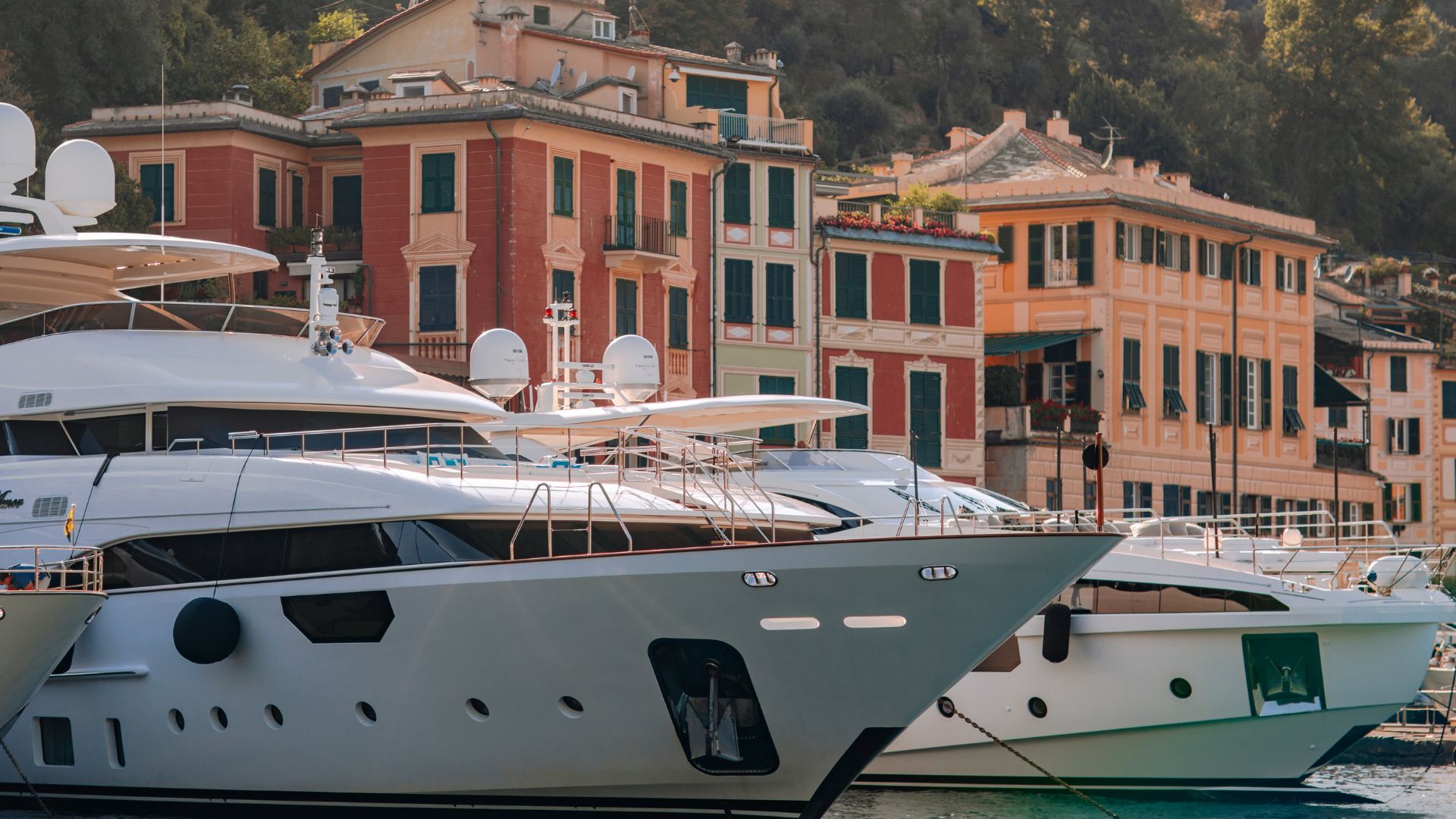







For decades, the French Riviera functioned as the visual shorthand for European affluence. Monaco marinas, Cap d’Antibes villas, and Cannes summer calendars created a predictable geography of wealth display tied to private aviation arrivals and tightly packed superyacht berths. Yet in recent years, a quieter shift has been unfolding among ultra-high-net-worth individuals, family offices, and globally mobile founders. Increasingly, the Dalmatian Coast of Croatia is emerging not as a trend destination, but as a deliberate repositioning strategy within European luxury behavior.
This movement is not about cost savings or novelty. It reflects a structural recalibration in how wealthy individuals signal status, manage privacy, and cultivate elite networks in an era defined by digital visibility and reputational risk. The Dalmatian Coast offers something the Riviera can no longer guarantee at scale: discretion without isolation, heritage without spectacle, and access without congestion.
For generational wealth stewards and rising capital holders alike, location choice has become a governance decision. Where one anchors a yacht, hosts partners, or spends August communicates alignment, taste discipline, and social strategy. Croatia’s Adriatic archipelago now occupies a meaningful position in that conversation.
From Display To Discretion: The Evolution Of European Yachting Culture
The French Riviera remains one of the most concentrated luxury ecosystems in the world, anchored by the Monaco Yacht Show and supported by dense infrastructure in brokerage, maritime law, and vessel management. According to the Monaco Yacht Show’s official reporting, hundreds of superyachts and thousands of industry professionals converge annually to transact assets worth billions of euros. This concentration of capital has historically reinforced Monaco’s role as a maritime capital marketplace.
However, high-density luxury environments create secondary effects. Marina congestion, escalating berth costs, increased media scrutiny, and heightened regulatory visibility have shifted the calculus for some ultra-high-net-worth individuals. In a landscape where wealth strategy increasingly includes reputation management and digital footprint control, overt clustering is not always advantageous.
The Dalmatian Coast offers a contrasting model. Stretching along more than 1,000 islands and inlets, Croatia provides geographic fragmentation that naturally supports privacy. Ports such as Hvar, Vis, Korčula, and Šibenik allow vessels to disperse across historic towns rather than concentrate in a single high-profile marina. The experience becomes spatially distributed rather than theatrically centralized.
This transition reflects a broader luxury behavior shift from performative presence to curated seclusion. For many family offices, privacy is not indulgence but operational discipline.
Geographic Fragmentation As A Status Strategy
One of the defining characteristics of the Dalmatian Coast is its maritime topography. The Adriatic islands create natural buffers that enable anchorages away from dense port infrastructure while maintaining access to cultural centers. This physical layout changes how leisure time unfolds and how relationships are cultivated.
In contrast to the Riviera’s harbor-as-stage model, Croatian yachting encourages movement between medieval stone towns, UNESCO-recognized heritage sites, and protected coves. The social architecture is decentralized. Meetings occur over private dinners in restored Venetian-era buildings or aboard vessels anchored offshore rather than on crowded promenades.
This decentralization signals a different form of cultural capital. It suggests knowledge of Europe beyond its most documented coordinates. Choosing the Dalmatian Coast communicates that one understands regional history shaped by Venetian trade, Austro-Hungarian governance, and Mediterranean maritime routes.
For upwardly mobile founders and next-generation wealth inheritors, this matters. Cultural fluency across lesser-publicized European geographies demonstrates depth rather than imitation. It is not about avoiding the Riviera, but about showing that one is not confined to it.
The Infrastructure Maturation Of Croatia’s Luxury Economy
Croatia’s rise in the luxury travel sector has been documented in reporting by organizations such as the Croatian National Tourist Board and major hospitality publications tracking Adriatic development. Over the past decade, marina upgrades, boutique hotel openings, and private villa restorations have increased significantly, particularly in Split-Dalmatia County and Dubrovnik-Neretva County.
Investment in nautical tourism infrastructure has strengthened the region’s viability for larger vessels. According to industry coverage in publications like SuperYacht Times and Boat International, Adriatic marinas have expanded to accommodate high-tonnage yachts while maintaining relatively lower density than French or Italian counterparts.
The maturation of infrastructure without overcommercialization is critical. Ultra-high-net-worth individuals do not merely seek scenery; they require reliable logistics, security standards, aviation connectivity, and high-quality provisioning. Split Airport and Dubrovnik Airport now serve as viable gateways for private aviation traffic during peak summer months, linking seamlessly with major European financial hubs.
For wealth managers and principals structuring seasonal movement, the Dalmatian Coast increasingly meets operational thresholds once exclusive to Western Mediterranean strongholds.
Culinary And Cultural Capital In The Adriatic Context
Status signaling in modern luxury travel extends beyond hardware such as yachts and villas. It increasingly revolves around intangible capital including food literacy, regional knowledge, and heritage appreciation.
The Dalmatian Coast offers a culinary framework rooted in olive oil production, Adriatic seafood, and centuries-old wine traditions from islands such as Korčula and Hvar. Michelin Guide recognition in Croatia has expanded in recent years, with starred establishments in Dubrovnik, Rovinj, and Šibenik elevating the country’s gastronomic profile. While the Michelin Guide does not define wealth, it functions as a global reference system for culinary authority.
Hosting partners in a private konoba overlooking the Adriatic conveys a different narrative than reserving a table in a hyper-visible Riviera dining room. The emphasis shifts from being seen to demonstrating curation. This aligns with a broader movement among global business elites toward cultivated travel rather than mass visibility.
Cultural events such as the Dubrovnik Summer Festival and classical music performances in historic fortresses further embed the region in Europe’s artistic calendar. Participation situates leisure within a framework of heritage continuity rather than contemporary spectacle.
Reputational Risk And The Geography Of Privacy
Reputational management has become an increasingly central consideration for ultra-high-net-worth individuals. According to wealth advisory commentary published by firms such as UBS and Deloitte in their global wealth reports, privacy, governance, and risk mitigation are now integrated components of wealth strategy.
The French Riviera, by virtue of its fame, invites surveillance from paparazzi, social media amplification, and public speculation. For entrepreneurs preparing liquidity events or executives navigating sensitive corporate transitions, controlled visibility can be a strategic asset.
Croatia’s Adriatic coastline, while established within European travel circles, remains comparatively insulated from constant global media exposure. The absence of large-scale red carpet events or concentrated celebrity infrastructure reduces the probability of involuntary publicity.
For family offices focused on generational wealth preservation, this matters. Leisure environments that minimize reputational volatility align with broader governance principles emphasizing stability and discretion.
Network Formation Beyond The Obvious Capitals
Elite networks do not only form in predictable capitals such as London, New York, or Monaco. They also emerge in liminal spaces where fewer participants share higher intentionality. The Dalmatian Coast increasingly functions as one of these environments.
Yachting in Croatia often involves curated guest lists rather than accidental proximity. When anchorages are dispersed, invitations become more selective. Conversations unfold over extended sail itineraries rather than compressed marina gatherings.
This shift enhances relationship depth. In high-density environments, network expansion may be broad but superficial. In decentralized geographies, connection formation tends to be narrower but more enduring.
For ambitious professionals integrating into ultra-high-net-worth ecosystems, understanding this distinction is critical. Access is not only about geography, but about context design.
The Dalmatian Coast As A Case Study In Luxury Recalibration
The growing preference for Croatia’s Adriatic coastline among segments of global wealth illustrates a broader recalibration in luxury consumption. It underscores the transition from visible affirmation to structured discretion, from spectacle to narrative control.
This does not signal the decline of the French Riviera, which remains foundational in maritime brokerage, asset exhibition, and European luxury heritage. Instead, it reveals diversification within elite leisure strategy. Just as wealth portfolios are diversified across asset classes, seasonal positioning is diversifying across geographies.
For ultra-high-net-worth individuals, the choice of coastline reflects internal priorities. Is the objective to transact, to display, to celebrate, to retreat, or to build relationships quietly? The Dalmatian Coast offers a platform optimized for the latter.
As global wealth continues to expand across new entrepreneurial centers in technology, energy, and private equity, the codes of status are evolving. Visibility alone is no longer sufficient currency. Controlled access, historical fluency, and geographic subtlety are gaining weight.
The Adriatic shift invites a broader reflection. In an era where capital is increasingly transparent and mobile, how does one balance presence with privacy? How should leisure environments align with governance principles and generational wealth planning? And as the map of refined travel expands eastward within Europe, what other overlooked geographies may quietly redefine the architecture of status?
EDITORIAL RESEARCH NOTE
This feature draws from publicly available reporting, industry observations, and established cultural insights related to refined travel, luxury hospitality, premium dining, and elevated social environments. The analysis reflects independent editorial interpretation of how exposure, environment, and lifestyle choices contribute to cultural capital and professional positioning. No confidential or proprietary information has been used in the preparation of this article.
SOURCES:
- Monaco Yacht Show
“Monaco Yacht Show Official Statistics and Market Reports”
https://www.monacoyachtshow.com
- Boat International
“Global Order Book Reports”
https://www.boatinternational.com
- SuperYacht Times
“Annual Market Reports and Adriatic Marina Coverage”
https://www.superyachttimes.com
- Croatian National Tourist Board
“Nautical Tourism and Marina Development Reports”
https://www.htz.hr
- Michelin Guide
“Croatia Restaurant Selections”
https://guide.michelin.com
- UBS
“Global Wealth Report”
https://www.ubs.com/global/en/family-office-uhnw/reports/global-wealth-report.html
- Deloitte
“Global Wealth Management Industry Outlook”
https://www2.deloitte.com
“Monaco Yacht Show Official Statistics and Market Reports”
https://www.monacoyachtshow.com
“Global Order Book Reports”
https://www.boatinternational.com
“Annual Market Reports and Adriatic Marina Coverage”
https://www.superyachttimes.com
“Nautical Tourism and Marina Development Reports”
https://www.htz.hr
“Croatia Restaurant Selections”
https://guide.michelin.com
“Global Wealth Report”
https://www.ubs.com/global/en/family-office-uhnw/reports/global-wealth-report.html
“Global Wealth Management Industry Outlook”
https://www2.deloitte.com